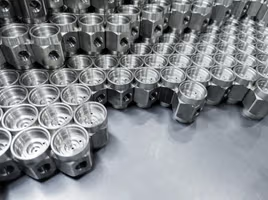
Design Freedom with MIM
Precision for Medical Devices
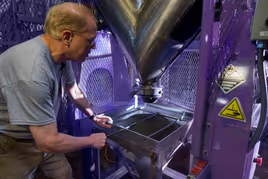
Watch the MIM Process in Action
What makes a good fit for MIM
MIM Design Guide
Metal Injection Moulding 101
Sustainable manufacturing through advanced metal injection moulding
Designing for metal injection moulding
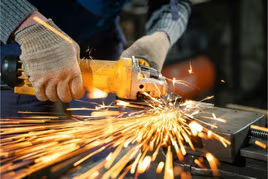
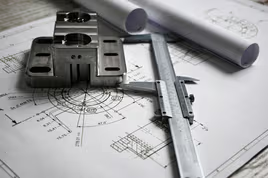
Machining to MIM for precision and cost savings
How to solve problems with MIM materials
How OptiMIM Builds Sustainability into Metal Injection Moulding
MIM series part 1
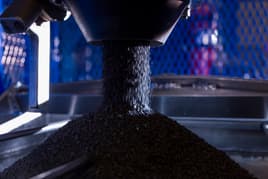
MIM series part 2: Feedstock
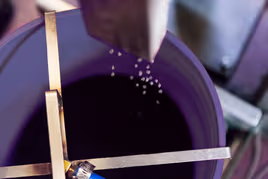
MIM series part 3: Compounding
MIM Series Part 4: Moulding
MIM series part 5: debinding
Material options – how does MIM compare?
Customising MIM materials for greater design freedom
Comparing metal injection moulding and powder metallurgy
How large can you create a MIM component?
Utilising MIM for Manufacturing at Scale
Streamlining FDA approval with OptiMIM
Value-added part consolidation with MIM
Metal injection moulding FAQ
Food-grade stainless steel
MIM vs. machining
MIM process series part 6: Sintering
Material spotlight: Kovar
Metal Injection Moulding Overview
Introduction to OptiMIM
Benefits of metal injection moulding
Metal injection moulding process
Investment casting vs. metal injection moulding: a process comparison
What makes a good fit for MIM?
MIM Experts Panel: FAQ
Securing scalability: Using MIM for high-volume manufacturing
Moulding excellence with MIM speciality alloys
MIM overview
MIM Round Table
Shaping the future: part consolidation with MIM
MIM Materials
Leveraging MIM for performance
The MIM Performance Dividend
Our engineers are here to answer your questions and show you how innovative investment casting technologies can revolutionise your next project and beyond.