

Last Updated: November 20, 2026
OptiMIM has completed independent rotating beam fatigue testing of its MIM S7-HIP tool steel, adding stress-life data to help engineers evaluate metal injection molding (MIM) for components exposed to repeated mechanical loading.
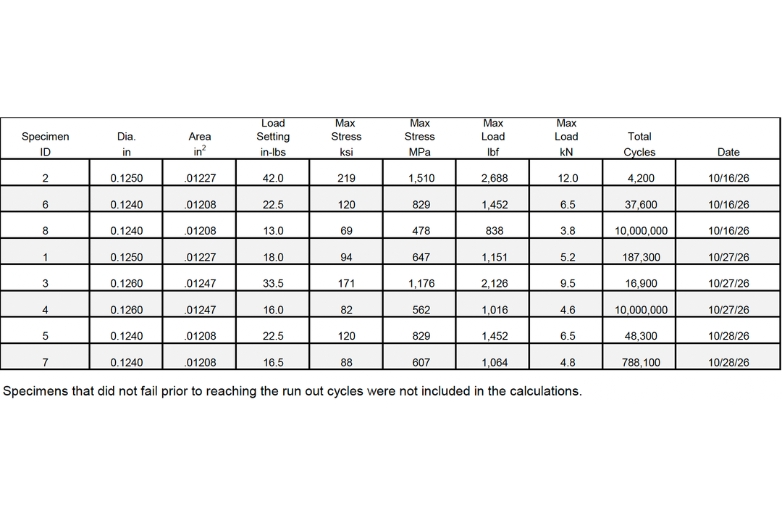
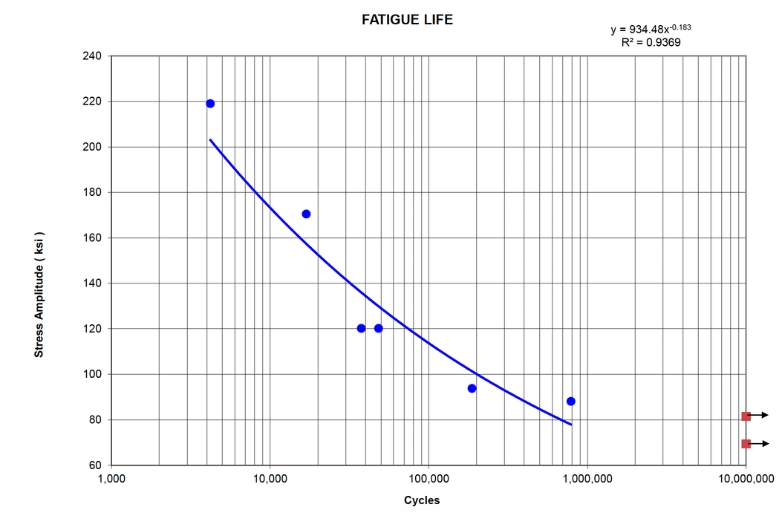
At certain tested stress levels, S7-HIP specimens reached 10 million loading cycles without failure. The results provide additional information for material selection and component design, complementing properties such as tensile strength, hardness, and elongation.
The testing began with a potential automotive application. Its broader value is helping engineers assess where S7-HIP MIM may fit applications in which repeated loading is a key design consideration.
What Did S7-HIP Fatigue Testing Demonstrate?
OptiMIM worked with Element Materials Technology's Detroit Wixom laboratory to evaluate the rotating beam fatigue performance of S7-HIP test specimens.
The testing produced an S-N curve, also called a stress-life curve, showing the relationship between applied stress and the number of loading cycles to failure. Specimens that reached the test endpoint without failure provide additional context for interpreting performance at the tested stress levels.
S7-HIP specimens reached 10 million cycles without failure at certain tested stress levels. These results demonstrate the fatigue performance of S7-HIP under controlled testing conditions, but should not be interpreted as a universal service-life guarantee for all S7-HIP components. For engineers, the value lies in evaluating the stress levels alongside the cycle counts, not the cycle count alone.
Why Does Fatigue Testing Matter for Metal Injection Molded Components?
Tensile strength, hardness, and elongation help engineers characterize a material, but they do not fully describe its response to repeated loading. Fatigue testing adds another dimension to material evaluation. The S7-HIP results give engineers additional reference data to support:
- Evaluating material suitability for repeated-loading applications.
- Comparing tested fatigue behavior with anticipated loading requirements.
- Identifying where component-specific analysis and testing are needed.
Actual component performance depends on geometry, manufacturing and finishing conditions, and the loads and environment encountered in service. Material-level fatigue data supports that evaluation; it does not replace validation of the finished component.
S7-HIP Fatigue Data for Automotive, Tools, and Medical Applications
OptiMIM initially pursued the testing to assess S7-HIP MIM against the requirements of a potential automotive application. The resulting data also provides a basis for discussions with engineers developing other components subject to repeated mechanical stress across a range of industries and applications.
Potential areas of interest include power tools, hand tools, and medical devices. Components such as gears, drive mechanisms, and other high-stress mechanical parts can experience thousands or even millions of loading cycles throughout their service life, making fatigue resistance a critical consideration for long-term performance and reliability. In each case, the relevant question is how the material's tested behavior relates to the component's geometry, loading, and operating requirements.
For engineers considering MIM alongside machining, forging, or other manufacturing processes, the fatigue results add another material-performance input to the evaluation.
Evaluate S7-HIP for Your Next MIM Component
Independent laboratory fatigue testing expands the information available to engineers considering OptiMIM's S7-HIP tool steel. By combining these results with application requirements and component-specific validation, engineering teams can make better-supported material and design decisions.
Explore OptiMIM's S7-HIP material capabilities and discuss your component's loading conditions and performance requirements with the OptiMIM engineering team.